Tribal Heritage
Meeting the Jebeliya: How One Act of Kindness Shaped My Relationship With Saint Catherine
The Jebeliya tribe, whose name means 'the people of the mountain', have lived for more than fourteen centuries in the highlands of Sinai. This is also the story of how I came to know them, and how the kindness of one man showed me the true heart of this tribe.
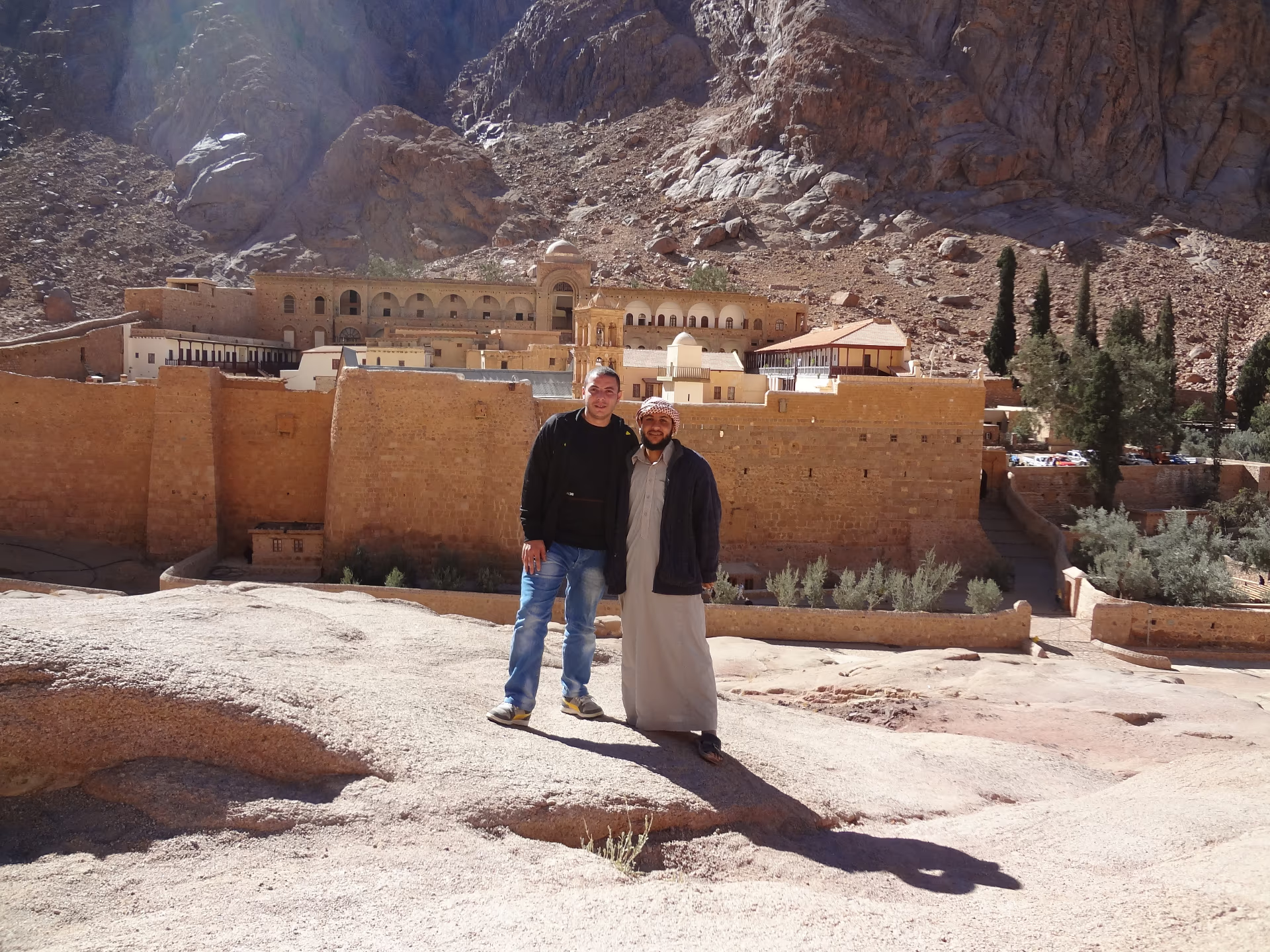
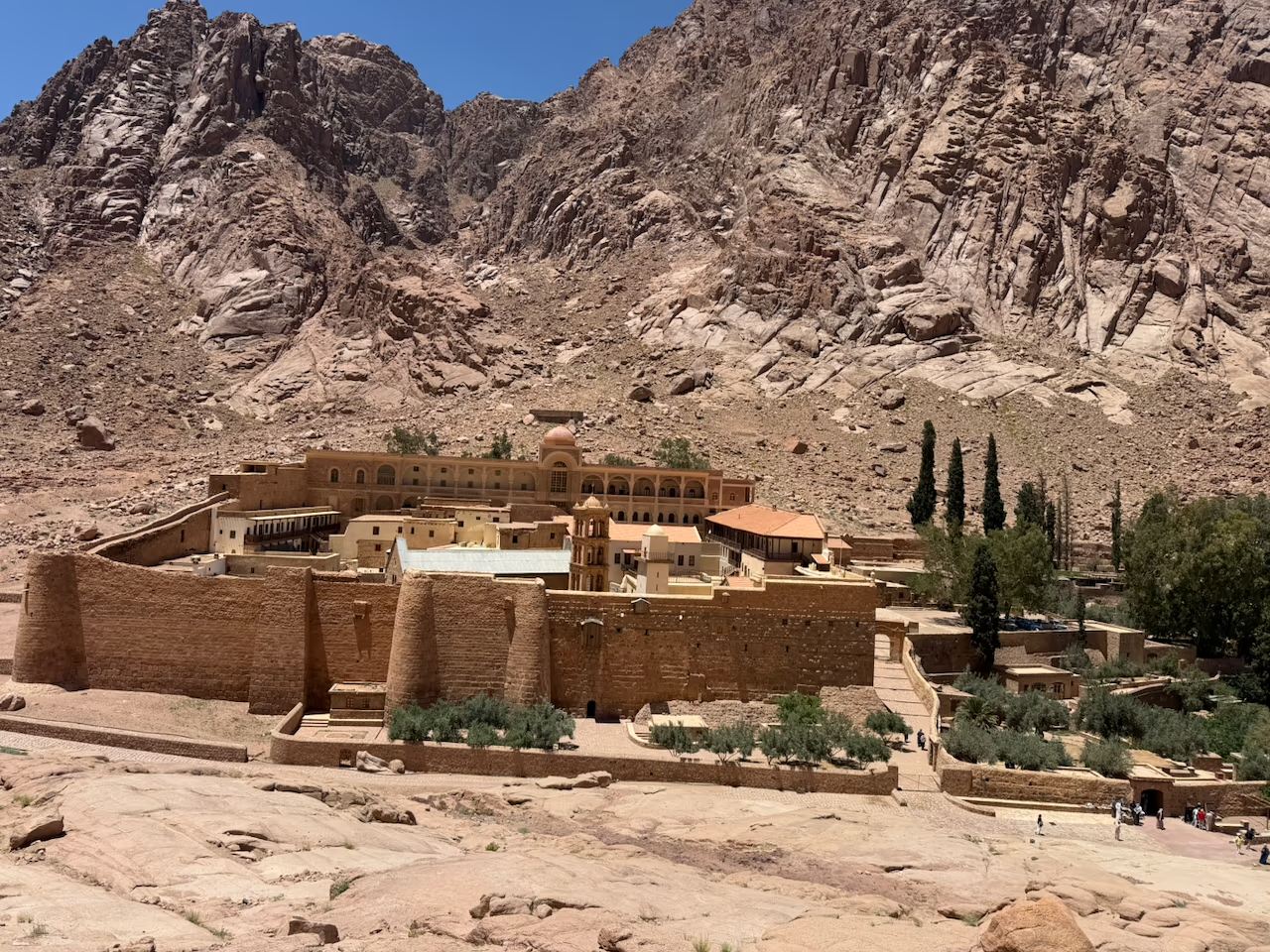
The Jebeliya tribe, whose name means "the people of the mountain", have lived for more than fourteen centuries in the highlands of Sinai. Their terraces, stone houses, and winding mountain paths surround the Monastery of Saint Catherine. Their history begins with Emperor Justinian, who brought families from the Eastern Mediterranean to guard the monastery in the sixth century. Over time, these families settled among the mountains, intermarried with local tribes, and created a community with a unique identity, distinct from other Bedouin tribes of Sinai.
But this is not only a story of origins. It is also the story of how I came to know the Jebeliya, how they shaped my connection to Saint Catherine, and how the kindness of one man showed me the true heart of this tribe.
A First Encounter with the Jebeliya
Years ago, during one of my earliest visits to Saint Catherine, my friend, Ramy, introduced me to a man named Ramadan Mahmoud alGebaly. Ramadan belongs to the Jebeliya and works as a guard at the monastery gate. The introduction was simple. My friend told him, "Ramadan, my friend Mohammed is visiting Saint Catherine. Please help him organize a quick trip to the top of Mount Moussa, and please take care of him."
I did not expect anything more than a practical arrangement. What happened next changed my entire relationship with this place.
When I arrived in Saint Catherine, Ramadan greeted me as if I were an old friend. He arranged a guide for the Mount Moussa hike. He organized resting points. He walked with me around town. He even took me on a very personal tour inside the monastery, sharing stories about the monks, the gardens, the walls, and the long history between his tribe and the monastery. These were stories that do not appear on official tours. They were shared from the perspective of someone whose family had lived this history for generations.
I realized then that Ramadan was not just helping me. He was representing his tribe, his town, and everything they believed in.
The Generosity That Defined the Tribe for Me
After the monastery tour, Ramadan invited me to his home for lunch. I had never met him before that day, yet he welcomed me as if I were family. We ate together, and because I had been traveling for days, exhaustion overtook me. I fell asleep while he was preparing tea.
What happened while I slept is something I will never forget.
Without waking me, Ramadan called the driver, whom he knew was taking me back to Cairo. He brought my luggage from the place where I was staying and loaded it into the car himself. He closed all the windows to warm the room, placed a heater near me, and covered me with a blanket so I could rest comfortably. He left the room quietly for a couple of hours until the driver arrived.
When he finally woke me, I was shocked to discover that everything had been taken care of. My luggage was packed. The car was ready. He then handed me a small bag with sandwiches and fruit he had prepared for my long trip back to Cairo.
I had known him for only a few hours.
In that moment, Saint Catherine became more than a beautiful place. It became a place of deep humanity. Ramadan's kindness, warmth, and instinctive generosity reflected not just his personality, but the collective character of the Jebeliya.
The Jebeliya Through the Lens of Experience
Once I began spending more time in Saint Catherine, I saw how this same spirit ran throughout the tribe.
The Jebeliya are guardians by heritage, but guardianship for them is not only about protection. It is about service, generosity, and treating guests as blessings. Their mountain gardens show patience and care. Their stories reveal humility. Their way of welcoming strangers shows a culture built on trust and respect.
What historians write about the Jebeliya is true. They have ancient roots. They are distinct among the tribes. They preserved mountain agriculture and terraced orchards. They developed stone architecture suited for cold highlands. They maintained a peaceful partnership with the monastery for centuries.
But the deeper truth is felt in smaller moments. A lunch shared with a stranger. A blanket placed over a sleeping guest. A bag of fruit prepared for a long road home.
These gestures reveal something essential about who they are.
Why This Story Matters
Saint Catherine is a place of mountains, monasteries, and sacred history. But for me, its soul is carried by the people who live here. My love for this place began with one person, one act of generosity, one moment of unexpected care.
Ramadan Mahmoud showed me the character of his tribe before I ever knew their full history. Because of him, the Jebeliya are no longer just "the people of the mountain". They are people of kindness, warmth, and quiet dignity. They are the heartbeat of Saint Catherine.
This is why, when we welcome guests to Dar Katrine, we always say: to know the desert, the mountains, and the monastery is to know the people who protect them. The Jebeliya are at the center of that story.
Learn More About the Jebeliya
If you would like to explore more about Ramadan, the Jebeliya tribe, and the history of Saint Catherine, these resources offer stories, interviews, and historical perspectives that bring the mountains to life in their own voices.
- صفحة سانت كاترين مدينتي الجميلة (Facebook)
- Ramadan El Jabaly: The Voices of the Mountain – TripZat
- Meet the Jebeliya: Egypt's People of the Mountain – Scoop Empire
- St. Catherine's Monastery – The Bedouin (Official Monastery Website)
- People of Mount Sinai – Mount Sinai Monastery Research Portal
- Saint Catherine, Egypt – Historical and Cultural Overview (Wikipedia)
— Mohammad